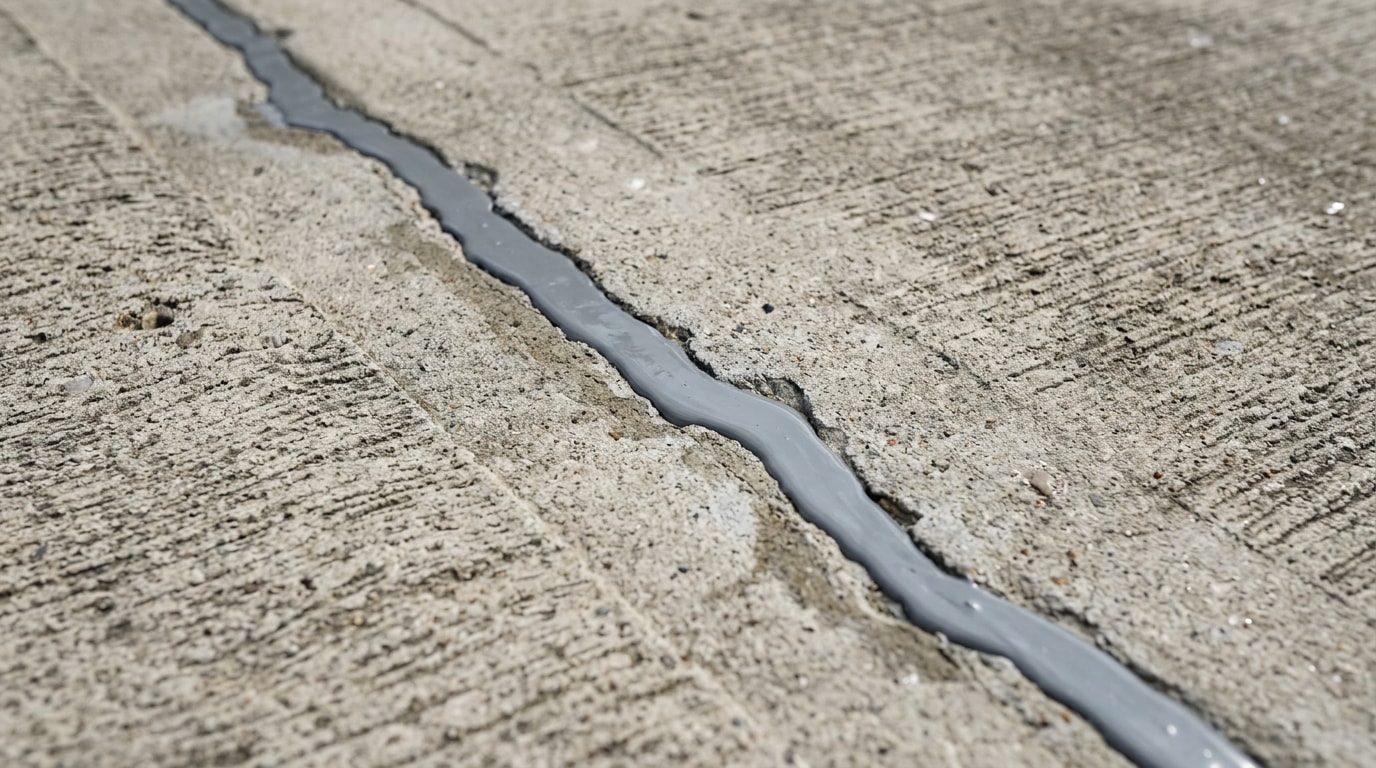
Self leveling concrete crack filler in Fremont, MI is the fastest way to stop a hairline driveway crack from turning into a pothole before the next freeze-thaw cycle hits. West Michigan winters push water into every gap, freeze it, and widen the crack overnight. This guide covers the tools, the technique, and the products that actually hold up here.
What Is Self-Leveling Concrete Crack Filler?
Self-leveling concrete crack filler is a pourable polyurethane sealant designed to settle flat on its own, while non-sag caulk stays put where it's applied, which makes the two suited to completely different jobs on the same slab. Self-leveling products work best on flat, horizontal joints like driveways, sidewalks, and patios. Non-sag caulk is the better choice for vertical cracks in walls or steps, since a self-leveling formula would simply run off before it cures.
Both fall under the broader category of flexible concrete caulk, built to expand and contract with the slab rather than crack again under stress. Many commercial-grade polyurethane and hybrid sealants are tested against the ASTM specification that covers the properties of a cured single- or multicomponent cold-applied elastomeric joint sealant for sealing, caulking, or glazing operations on buildings, plazas, and decks for vehicular or pedestrian use . Quikrete's commercial-grade self-leveling line, for example, is designed to deliver or exceed the performance of traditional polyurethane or silicone sealants and meets ASTM C920 standards , and that same benchmark is a useful reference point even for the consumer-grade tubes sold at Fremont hardware stores.
How to Choose the Best Self-Leveling Concrete Crack Filler
Choosing a filler comes down to three questions: how wide is the crack, is the surface horizontal or vertical, and how much temperature swing will it face before it cures. Getting these right narrows the product list fast.
Application Method Matters
Liquid pour-in fillers, caulk-gun sealants, and trowel-applied compounds all go on differently. A self-leveling formula is poured or gunned into the crack and then left alone, since gravity and the product's own flow properties do the smoothing work. Trowel-applied compounds need to be worked by hand to match the surrounding surface, which takes more skill and more time.
Key Features to Look For
Good adhesion, thorough crack preparation, and correct mixing ratios matter more than brand name. The American Concrete Institute's crack-repair guidance backs this up: before any sealant goes in, the crack face should be cleaned about 1/2 in. wide on each side to ensure materials used to seal the top of the crack will bond properly to the concrete , and wire brushing is recommended because mechanical grinders may fill the cracks with unwanted dust . For two-component polyurethane systems, following the mixing ratio exactly affects both cure time and final flexibility.
Here's a direct comparison of three widely available options:
| Product | Crack-Width Capacity | Cure Time | Best-Use Surface |
|---|---|---|---|
| Sikaflex Self-Leveling Sealant | Up to 1 in. | 24–72 hours full cure | Driveways, garage floors |
| Loctite PL Self-Leveling Sealant | Up to 0.5 in. | 24 hours tack-free | Interior and exterior joints |
| Quikrete Concrete Crack Seal | Hairline to 0.25 in. | A few hours tack-free | Thin cracks, sidewalks |
For a deeper look at when a filler isn't enough for a cracked slab, see our concrete driveway repair guide for Grand Rapids, which covers repair-versus-replace decisions in more detail.
Top Self-Leveling Concrete Crack Filler Picks
These products are widely stocked at Michigan hardware and home improvement stores, and all three are flexible, self-leveling formulas suited to the horizontal cracks most Fremont homeowners deal with on driveways and patios.
Sika Sikaflex Self-Leveling Sealant
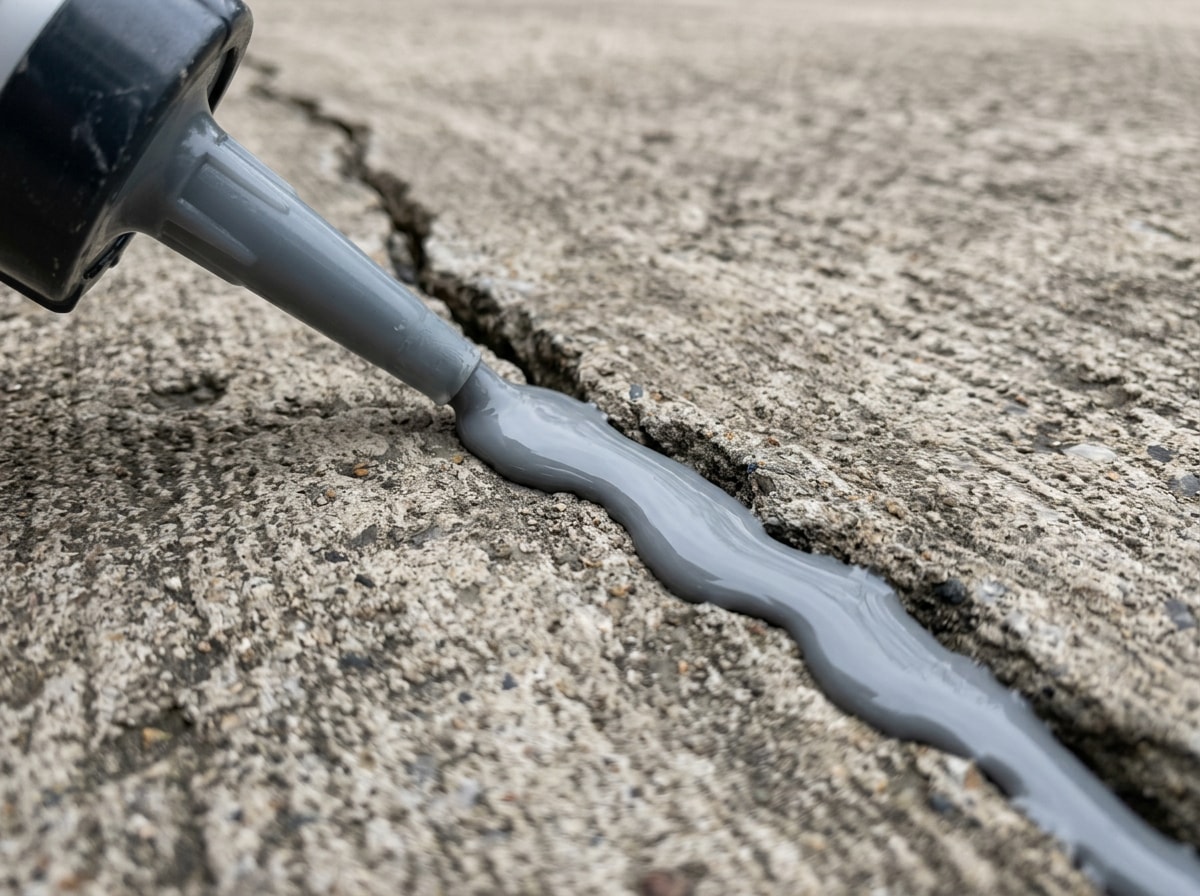
This is a solid pick for best overall crack filler status, largely because of its wide crack capacity and straightforward caulking-gun application. A 10.1 fl. oz. tube can fill horizontal cracks in concrete up to 1 in. wide and runs $11.47 at Home Depot as of this writing. It's a true polyurethane crack filler, which means it stays flexible through Michigan's freeze-thaw cycles rather than going brittle. Full cure takes several days depending on temperature and humidity, so plan repairs for a dry stretch of weather.
Loctite PL Self-Leveling Concrete Sealant
This polyurethane-based sealant works on both interior and exterior slab joints, which makes it a flexible option if you're sealing a garage floor crack and a sidewalk crack in the same afternoon. It handles smaller gaps well but isn't built for the wider cracks Sikaflex covers.
Quikrete Concrete Crack Seal
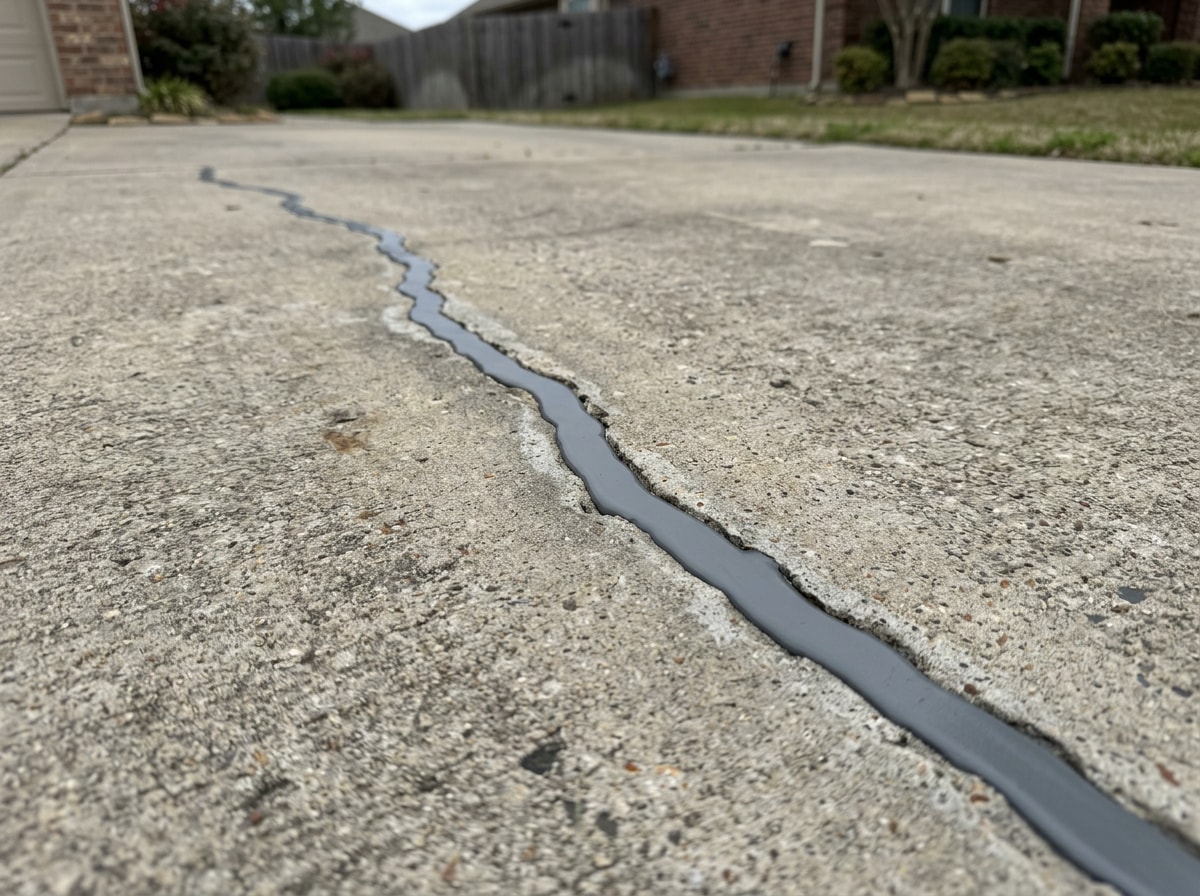
For thin or hairline cracks, this is the more budget-friendly choice. The self-leveling formula conforms to the surrounding surface and dries to a hard but flexible finish , which makes it a good fit for surface-level hairline repairs rather than structural gaps.
Step-by-Step: How to Apply Self-Leveling Concrete Crack Filler
A solid repair follows a predictable order: clean the crack, dry it completely, prep the edges, then apply the filler. Skipping the cleaning step is the single most common reason a self-leveling repair fails early.
Tools and materials you'll need:
- Caulk gun (standard or XL, depending on tube size)
- Wire brush or stiff broom for debris removal
- Compressed air or shop vac to clear dust
- Backer rod or non-sag caulk to dam wide cracks
- Utility knife to clean up excess filler
- Rubber gloves and a rag for cleanup
Apply the Caulk
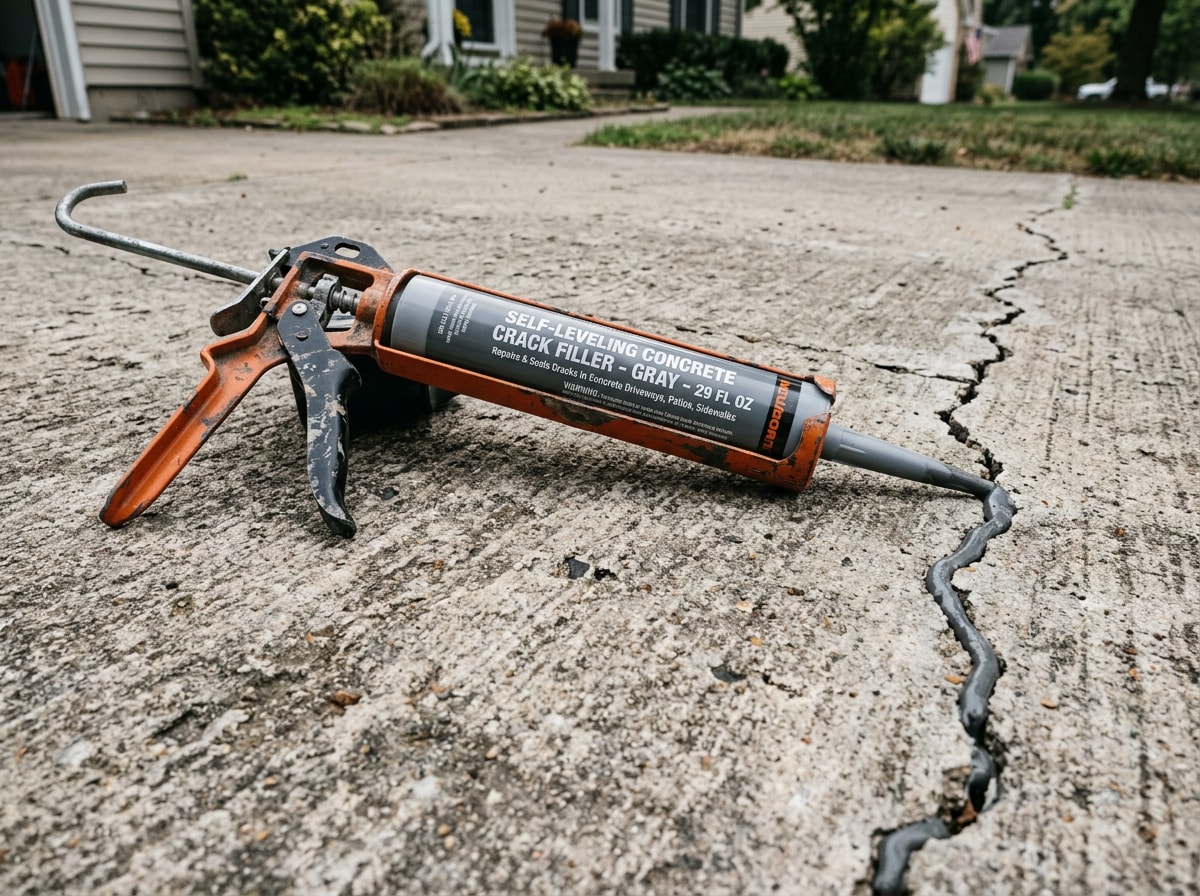
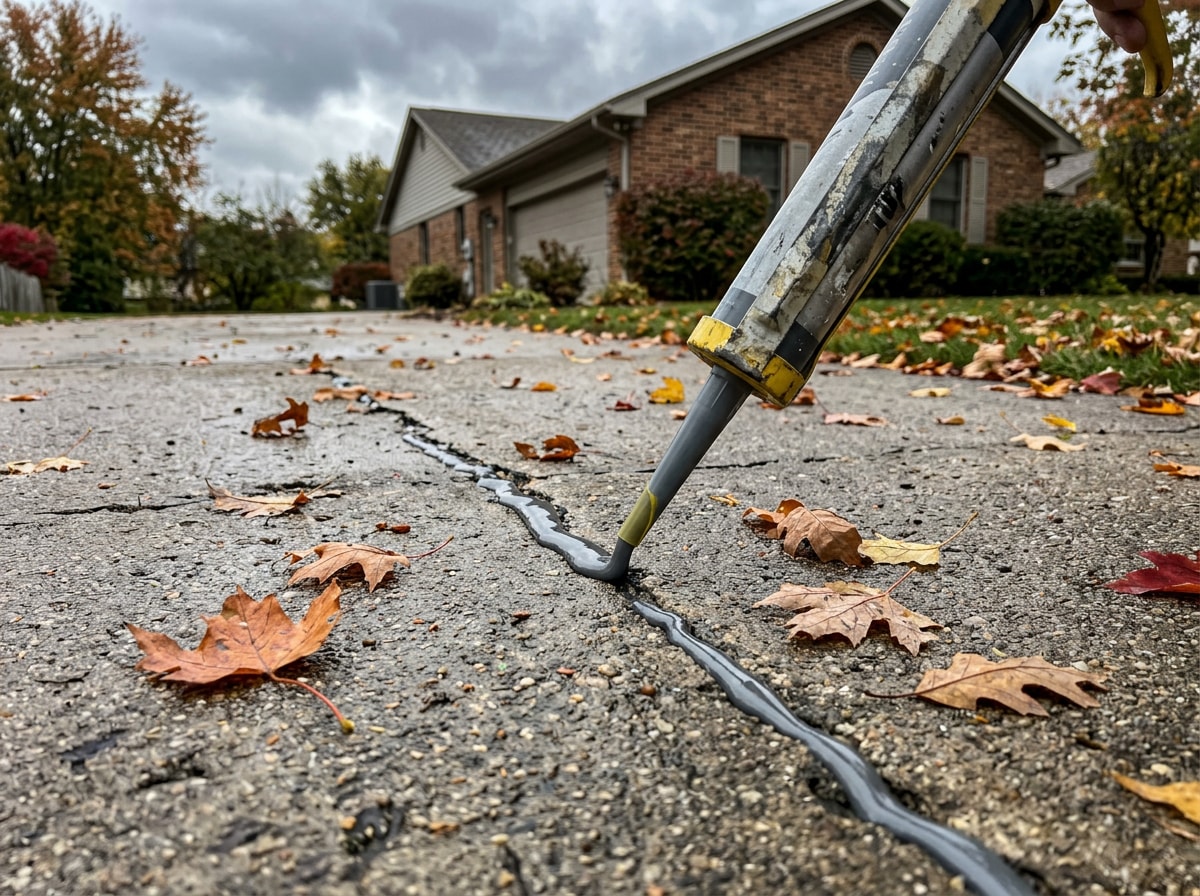
Hold the caulk gun at roughly a 45-degree angle. Move steadily along the crack to lay down a continuous bead. Stopping and starting mid-crack is what causes uneven pooling.
On wider gaps, dam the ends with a bit of non-sag caulk first so the self-leveling product doesn't drain out before it sets. This keeps the material where it needs to be while it levels itself flat.
Resist the urge to over-fill. A slight over-mound might look thorough, but it just means more trimming later and a repair that doesn't sit flush with the slab. Apply just enough to fill the crack level with the surrounding concrete and let the self-leveling formula do the smoothing work.
Pro Tips for Driveway Crack Repair
Skip rigid mortar or cement-based patch products on cracks that see any slab movement. They don't flex the way polyurethane does, so they tend to crack again at the repair line within a season or two. A flexible filler moves with the concrete instead of fighting it.
On our own repair calls across Newaygo County, the slabs that fail fastest are the ones where a sealed crack sits right next to a low spot that's still catching standing water after every rain. Leveling an uneven or sunken slab section before caulking, rather than after, avoids that problem. Caulking over an already-shifted slab just means patching the same spot again once the ground settles further.
How Temperature Affects the Repair
Temperature matters more in Fremont than in warmer climates. Most polyurethane sealants need surface temps above 40–50°F to cure properly, which narrows the practical repair season here to roughly April through October. West Michigan's freeze-thaw pattern is also well documented: researchers compare daily minimum and maximum temperatures to the freezing threshold to count freeze-thaw events, excluding readings within 1°F of freezing to confirm a surface actually froze and thawed , which is exactly the kind of repeated expansion and contraction that breaks rigid, non-flexible patches apart. Tracking how a filler performs through at least one freeze-thaw cycle is a better real-world test than judging it on a single warm-day application.
Concrete Repair Vs. Concrete Replacement
A self-leveling filler handles surface cracks and joint separation well, but it isn't a fix for a slab that's heaving, sinking, or cracked clear through. If a crack keeps widening season after season or a section of slab has visibly dropped, that's usually a sign the sub-base has failed, and filler alone won't solve that.
If you're not sure which side of that line your driveway is on, a second opinion saves money either way. Get a free estimate from our crew before you commit to a DIY tube or a full replacement.
Cost of Self-Leveling Crack Filler in Fremont, MI
A single tube of self-leveling filler runs roughly $11 to $30 depending on size and brand, enough for most single-driveway repairs with a handful of cracks. That makes DIY the obvious choice for a few hairline cracks.
Professional crack sealing costs vary by crack length, access, and whether a protective sealant coat is included, so the only reliable number is a quote for your specific driveway. The DIY-versus-professional decision usually comes down to scope: a few hairline cracks is a reasonable weekend project, while multiple wide cracks or any sign of slab movement is worth a contractor visit.
See our full list of service areas across West Michigan to check coverage near Fremont, or visit our homepage for the full range of paving and concrete-adjacent services we offer.
FAQ
What Is Self-Leveling Concrete Crack Filler?
Self-leveling concrete crack filler is a pourable polyurethane sealant that flows into a horizontal crack and settles flat on its own, unlike rigid patching compounds that require troweling or non-sag caulk that holds its shape where applied. It's built to flex with slab movement rather than crack again under stress.
How Long Does Self-Leveling Concrete Crack Filler Take to Dry?
Most products go tack-free within a few hours of application, but full cure can take anywhere from 24 hours to several days depending on the brand, crack depth, and outdoor temperature. In Fremont's cooler months, cure times run longer, so apply filler during a stretch of mild, dry weather whenever possible.
Can You Use Self-Leveling Crack Filler on Vertical Cracks or Walls?
No. Self-leveling formulas are made to flow and settle flat, so on a vertical surface they'll simply run off before they cure. Use a non-sag caulk for walls, steps, or any vertical crack instead.
How Much Crack Filler Do I Need for a Driveway?
A standard 10.1 fl. oz. caulk-gun tube typically covers several feet of a narrow crack, but coverage drops fast on wider or deeper gaps. For a driveway with multiple cracks or anything wider than a half-inch, buy at least one extra tube so you're not stopping mid-repair to make a second store run.
How Do You Remove Concrete Crack Filler?
Once cured, polyurethane filler has to be cut or scraped out mechanically. A utility knife or scraper works for shallow repairs, though deeper fills may need a rotary tool. Solvents have limited effect on fully cured polyurethane, so mechanical removal is usually the more realistic option for a DIY fix. If a repair has failed repeatedly, it's worth requesting a free estimate rather than redoing it a third time. You can also browse our crack filling service if your cracks are on an asphalt surface instead of concrete.
---
Written by Derek Edwards, owner and lead estimator at Edwards Sealcoating and Asphalt Repairs, with 15+ years repairing driveways and parking lots across West Michigan's freeze-thaw climate. Questions about a specific crack or slab? Contact our team.