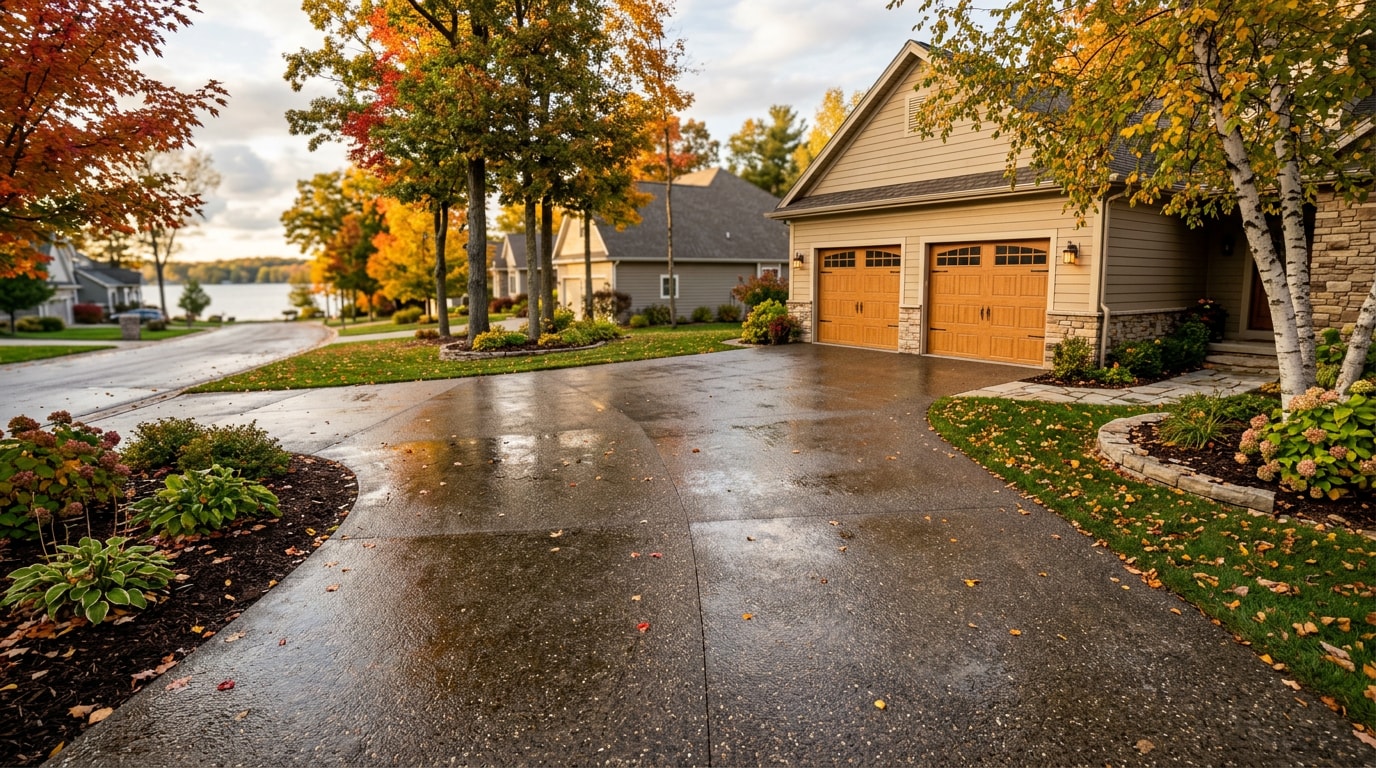
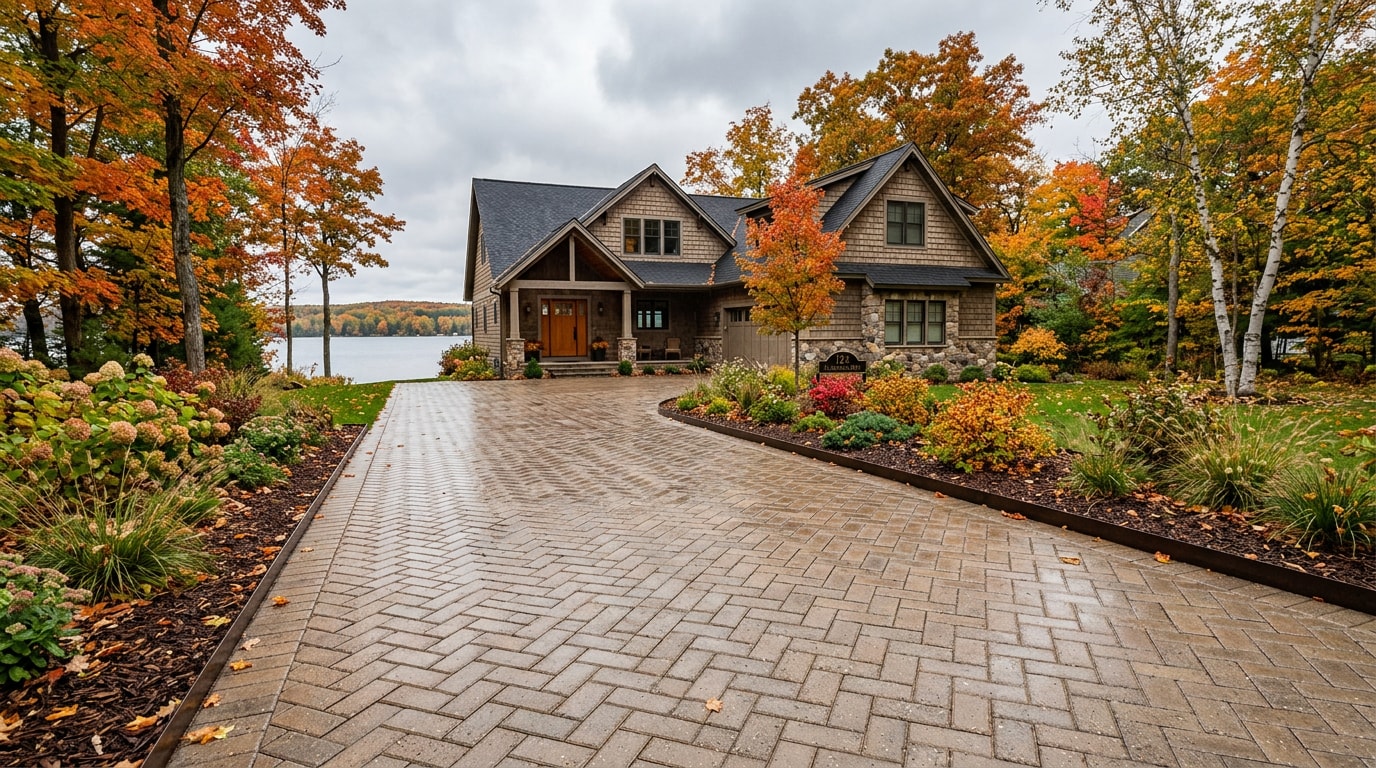
Concrete pavers in Manistee, MI have to survive something most hardscape marketing glosses over: a lakeshore freeze-thaw cycle that can run from October through April. Pavers generally handle that stress better than a poured slab, but only when the base underneath is built to spec, not just when the units themselves look good on a sample board. Here's what actually determines whether a paver driveway, patio, or walkway holds up in Manistee, plus an honest comparison to the other surfaces we install every day.
Concrete Pavers vs. Poured Concrete vs. Asphalt
Most homeowners comparing hardscape options in Manistee are really choosing between three materials, and each one trades off differently in a freeze-thaw climate.
| Feature | Concrete Pavers | Poured Concrete | Asphalt |
|---|---|---|---|
| Upfront cost | Highest | Moderate | Lowest |
| Typical service life | 20-30+ years with proper base | 15-20 years before major repair | 15-20 years with regular sealcoating |
| Freeze-thaw behavior | Flexes at the joints instead of cracking | Rigid; hairline cracks widen over winters | Flexes but can ravel or pothole if base fails |
| Repair method | Lift and swap individual units | Patch or replace the slab | Crack-fill, patch, or overlay |
| Ongoing maintenance | Joint sand top-off every few years | Occasional sealing and crack patching | Sealcoating every 2-3 years |
| Best fit | Patios, walkways, driveways where design flexibility matters | Budget-driven driveways and sidewalks | Driveways and parking lots prioritizing lowest install cost |
As a third-generation paving family working across West Michigan, we've watched enough freeze-thaw seasons go by to know the material matters less than the installation underneath it. If your project is really an asphalt driveway or parking lot that just needs attention rather than a full paver rebuild, our asphalt paving services and asphalt repair work are usually the faster, lower-cost route.
Why Manistee's Freeze-Thaw Climate Makes Base Prep Non-Negotiable
Pavers don't fail because the concrete itself is weak. They fail because the aggregate base underneath wasn't compacted to the right depth for the soil and traffic load.
Industry guidance from the Concrete Masonry & Hardscapes Association (the group that absorbed the former Interlocking Concrete Pavement Institute) is specific on this point. Patios and pedestrian areas should have a minimum base thickness of at least 4 inches over well-drained soils, while residential driveways on well-drained soils should be at least 6 inches thick. In colder regions with wet or weak soils, those thicknesses need to grow. Greater base thicknesses are often used in regions with numerous freeze-thaw cycles, expansive soils, or very cold climates. That's effectively a description of a Manistee winter.
The pavers themselves also have to meet a minimum strength and durability bar. Under ASTM International's governing specification for interlocking concrete paving units, these units are required to have a minimum average compressive strength of 55 MPa (8,000 psi) , and they're tested specifically for freeze-thaw resistance before they're rated for cold-climate use. Ask any installer quoting your project whether the pavers and base design meet those benchmarks, not just whether the color matches your house.
Design Options That Fit Manistee Properties
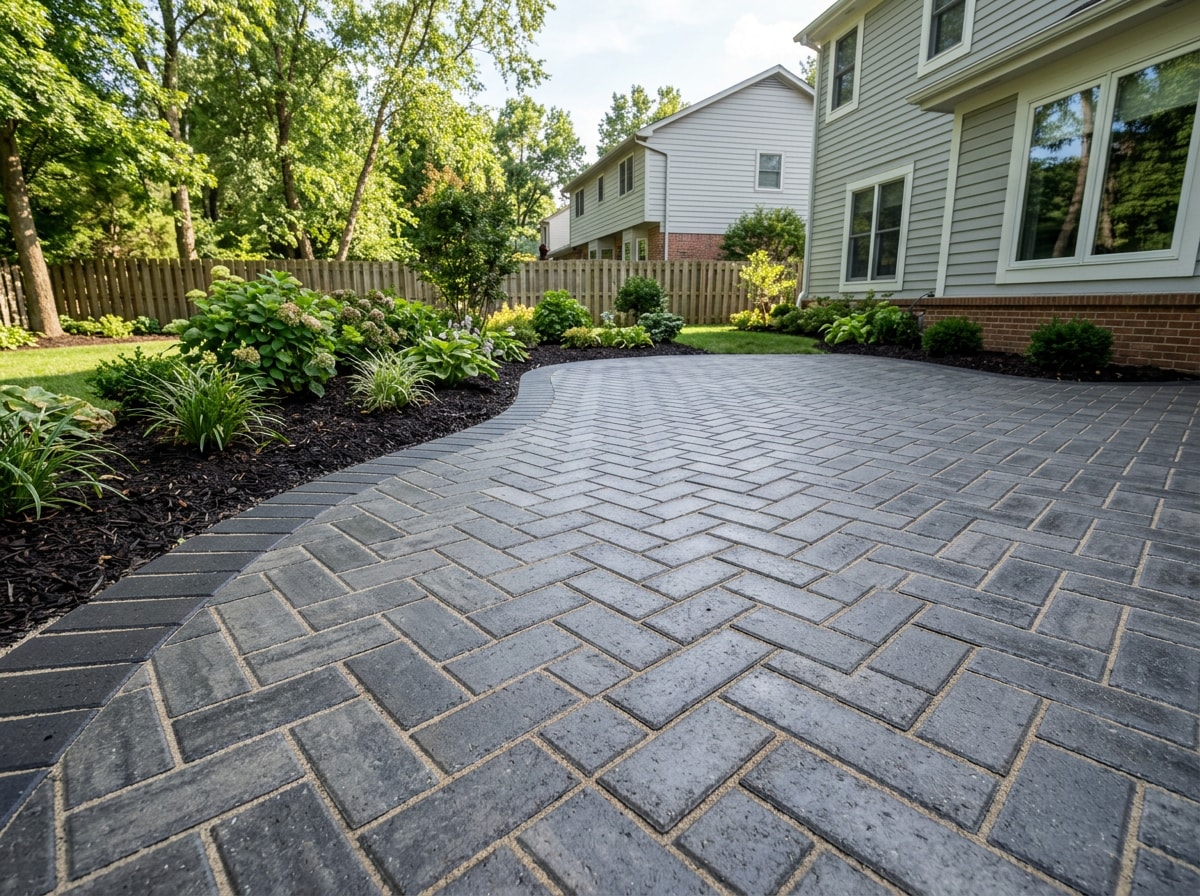
Pavers come in enough colors, textures, and laying patterns, from herringbone to basketweave to tumbled natural-stone looks, that they work equally well on a historic downtown Victorian or a newer build along the lakeshore. Two practical notes from projects we've seen go right and wrong:
- Walkways need enough width for two people to pass comfortably, plus a rigid edge restraint. Without one, units creep sideways within a season or two.
- Mixed-tone borders (a darker paver outlining a lighter field) read as a custom design upgrade without the cost of a fully custom pattern.
- Driveways carrying vehicle loads need the thicker base spec noted above, not the patio-depth base, even if the square footage looks similar.
Maintenance and Realistic Lifespan
Routine paver care is mostly sweeping, occasional weed control in the joints, and topping off joint sand every few years as it settles. Compare that to poured concrete, which usually needs crack sealing, patching, and eventually full-slab replacement once damage spreads past a certain point.
The modularity is the real long-term advantage: a stained, cracked, or heaved individual paver can be pulled and replaced without touching the surrounding surface. There's no patch line, no mismatched repair color, and no need to tear out a whole section the way poured concrete repair often requires. If you want a side-by-side on what concrete-specific repair and resurfacing actually costs in a comparable West Michigan market, our concrete resurfacing price guide for Sparta, MI breaks down real pricing factors.
Commercial Concrete Paver Applications in Manistee
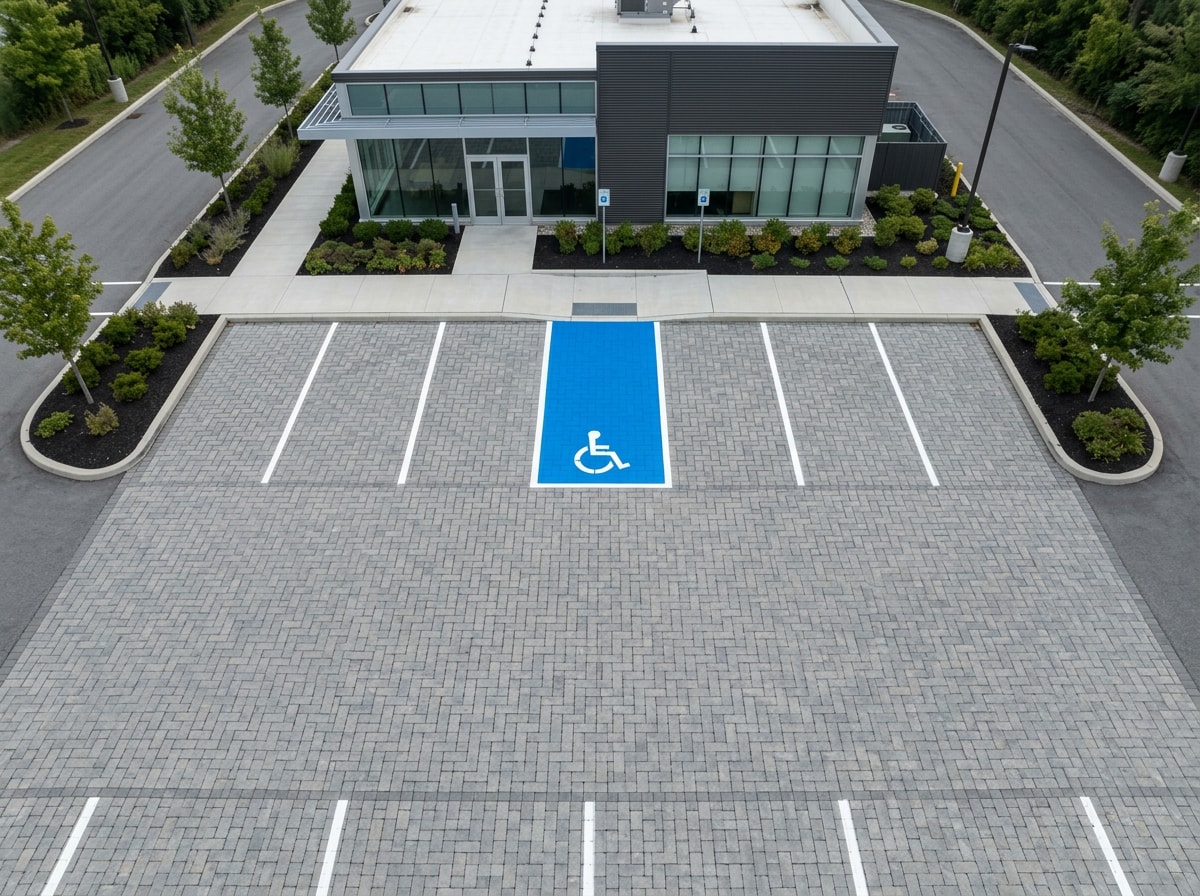
Commercial properties need pavers rated for sustained vehicle and foot traffic, not just the lighter spec used for a backyard patio. Heavy-duty paver systems for parking lots and loading areas have to meet higher load requirements, and a growing number of Manistee-area businesses are specifying permeable interlocking pavers to manage stormwater runoff on site.
Permeable pavements store and infiltrate rainwater where it falls, with the surface layer made of pervious concrete, porous asphalt, or permeable interlocking pavers, and stormwater soaks in at the surface before being stored in underlying layers of soil and gravel. That's a real stormwater management tool, not just a marketing bullet point.
Accessibility matters just as much as drainage on a commercial lot. Any paved accessible route, including paths to van-accessible spaces, has to meet federal requirements. An accessible route never has curbs or stairs, must be at least 3 feet wide, and has a firm, stable, slip-resistant surface. Loose-laid or poorly compacted pavers can fail that standard even if they look fine on install day. If your commercial project also needs striping, handicap space marking, or broader parking lot maintenance, that work should be planned alongside the paving, not bolted on afterward.
Hiring a Concrete Paver Contractor in Manistee, MI
Hardscape performance depends heavily on who's doing the installation. A contractor who regularly works in this part of Michigan understands local soil drainage quirks along the lakeshore, how deep to go on base prep for the frost cycles here, and realistic material lead times for the region.
A few practical, Manistee-specific points worth knowing before you sign a contract:
- Timing matters. Installation generally pauses once the ground is frozen; spring through fall is the realistic install window.
- Permits vary by project. A standalone patio often doesn't need one, but driveway work that touches drainage, grading, or the public right-of-way may require a check with the City of Manistee or county building department. Confirm this before work starts, not after.
- Ask about base design in writing. Get the proposed base depth and compaction method on the estimate itself, not just a verbal assurance.
If your Manistee property is in our broader service area and the project turns out to be asphalt-based rather than paver-based, that's a conversation worth having before you commit to one material. We'd rather tell you honestly which surface fits your driveway, budget, and timeline than sell you the wrong one. Get a free estimate and we'll walk the site with you.
FAQ
What is the typical cost difference between concrete pavers and asphalt in Manistee, MI?
Pavers generally cost more upfront than asphalt because of material and labor-intensive installation. Asphalt is cheaper to install but needs sealcoating roughly every 2-3 years and a full resurfacing sooner than a well-built paver surface. Which one is "cheaper" depends on how long you plan to own the property.
How long do concrete paver driveways and patios last in Michigan?
With a properly compacted base, pavers commonly last 20 to 30 years or more. Lifespan depends far more on base depth and drainage than on the paver product itself.
Do I need a permit for a paver patio or driveway in Manistee?
Often a simple patio doesn't require one, but driveway projects that affect drainage, grading, or the right-of-way may need approval from the City of Manistee or Manistee County building department. Check before work starts.
Can pavers be installed during a Michigan winter?
No, not once the ground is frozen. Base material can't be properly compacted over frozen subgrade, so most contractors schedule paver installs from spring through fall.
Why choose a professional for paver installation instead of a DIY base?
Longevity comes down to base compaction, not the paver quality alone. A professional grades the site correctly, uses the right aggregate depth for your soil and traffic load, and compacts each layer properly, steps that are easy to shortcut but expensive to fix once pavers are already down.
Do paver patios and driveways require ongoing maintenance?
Yes, but it's minimal. Expect occasional joint-sand replenishment, spot cleaning for stains, and polymeric sand refresh every few years depending on traffic and sun exposure.
Looking for a straight answer on whether pavers, poured concrete, or asphalt is the right call for your Manistee property? Visit Edwards Sealcoating and Asphalt Repairs or request a free estimate and we'll give you our honest read before you spend a dollar.